


Dental Extraction Instruments: Types, Uses & How to Choose the Right Tools

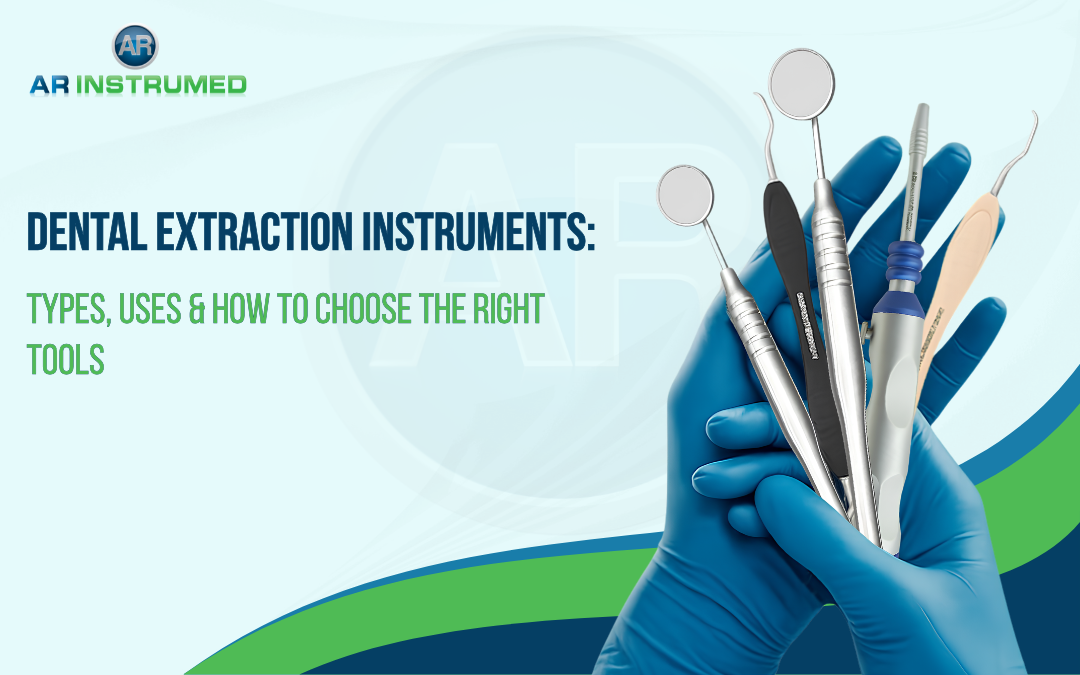
Dental extraction instruments are the hand instruments used to loosen, grip and remove teeth and roots, and to manage surrounding tissue in surgical cases. The main groups are extraction forceps, root elevators, luxators and periotomes, and supporting surgical instruments, often organised into sets.
Choosing the right category matters because each one does a different job. A mismatched tray is either incomplete or full of instruments you rarely use. Needs also differ by buyer. A solo dentist wants a compact working set. A hospital or dental school standardises trays across many operatories. A distributor needs a range wide enough to cover many patterns.
AR INSTRUMED is a dental instruments manufacturer based in Sialkot, Pakistan. Its dental extraction instruments category currently lists 586 products, making it a useful reference point for exploring the different types of extraction instruments used in dental practice.
What Are Dental Extraction Instruments?
Dental extraction instruments are the tools used in tooth removal and related oral surgery. Most extraction trays combine three functions: forceps to grip the tooth, elevators and luxators to loosen it, and surgical adjuncts for access and tissue handling.
This guide covers product knowledge for buyers. Technique and instrument choice for each case remain the treating dentist’s clinical decision.
Types of Dental Extraction Instruments
Dental extraction instruments serve different purposes during tooth removal. Understanding their designs and functions helps dental professionals compare suitable instruments for routine extractions, root removal and surgical procedures.
Dental Extraction Forceps
Forceps grip the tooth so the dentist can apply controlled force. Patterns are shaped for different tooth groups and for upper versus lower arches. Paediatric forceps are smaller and designed for primary teeth. AR INSTRUMED lists anatomical-handle and standard-handle versions, along with a separate children's forceps category.
Explore Dental Extraction Forceps →Dental Root Elevators
Elevators are slender instruments used to loosen a tooth in its socket or remove root fragments. Tip width, shape and handle design vary by pattern. Examples include Seldin and Lindo-Levian patterns, with some options available in a gold finish.
Browse Dental Root Elevators →Luxators and Periotomes
These thin-bladed instruments are used to sever periodontal ligament fibres before forceps or an elevator is applied. Clinicians may select them when aiming for a more conservative extraction technique. AR INSTRUMED lists periotomes separately, while luxators are available in the silicone-handle range.
View Extraction Instruments →Extraction Instrument Sets and Surgical Adjuncts
Instrument sets bring commonly used tools together for a procedure or clinic standard. Surgical trays may also include bone rongeurs, periosteal elevators, retractors, scalpel handles and needle holders. Buyers can compare instrument sets alongside extraction and surgery ranges to plan their requirements.
Explore Dental Instrument Sets →Ready to Compare Dental Extraction Instruments?
Dentists, clinics, hospitals, dealers and distributors can explore available instrument patterns and review product details to identify options suited to their requirements.
Explore All Extraction Instruments →| Instrument | Main role | Confirm before buying |
|---|---|---|
| Extraction forceps | Grip and remove the tooth | Pattern, arch, adult or child size, handle style |
| Root elevators | Loosen teeth, retrieve roots | Tip width and shape, handle, finish |
| Luxators / periotomes | Sever the periodontal ligament | Blade width, length, handle type |
| Sets | Standardised trays | Exact contents, count, tray compatibility |
| Surgical adjuncts | Access, bone and tissue handling | Fit with your surgical protocols |
How to Choose the Right Dental Extraction Instruments
Start with the procedures you perform most often, then match instruments to them. Forceps, for example, are chosen by the tooth groups treated, the dentist’s preferred handle style and whether adult or paediatric sizes are needed. Then check these points:
- Instrument type and intended use: match each instrument to a defined role, not just a familiar name.
- Design and dimensions: compare tip widths, beak shapes and overall length against your preferred patterns.
- Material and manufacturing quality: ask for the material grade. Stainless steel is standard, but grades and heat treatment differ.
- Finish and handling: check balance, grip and finish, since these affect control during long sessions.
- Sterilisation compatibility: confirm the instrument can be reprocessed using your method, following the manufacturer’s instructions for use.
- Configurations: check whether items are sold individually, in sets or as custom configurations.
- Written specifications: reliable listings state dimensions and product codes, so reorders match.
- Bulk needs: for larger orders, confirm consistency across batches
What to Look for in a Dental Extraction Instruments Supplier
A supplier shapes what arrives on your tray and how easily you can reorder, so evaluate one before the first purchase. Look for:
- Range depth: several patterns per category, not a few generic items.
- Clear specifications: product codes, dimensions and images that match the order.
- Manufacturing transparency: a real manufacturer should explain its processes and documentation.
- Communication: prompt, specific answers to technical and ordering questions.
- Procurement flexibility: willingness to discuss quantities, configurations and documentation.
Ask for documentation relevant to your market before ordering in volume. Distributors and institutions in particular should confirm what regulatory paperwork they need. If you need more product detail, contact AR INSTRUMED with the instrument codes and quantities you are considering.
Why Consider AR INSTRUMED?
AR INSTRUMED manufactures dental instruments in Sialkot, Pakistan. Its website describes a portfolio of more than 2,700 items across specialties from extraction to implantology. For extraction work specifically, the range covers forceps, root elevators, periotomes, bone rongeurs and children’s forceps, with sets in separate categories.
The site also states that its team can work on custom instrument designs or modifications to existing products. It publishes a Certifications page, instructions for use and downloadable catalogues, so buyers can review documentation before they contact the company.
Conclusion
The right dental extraction instruments come from matching categories to your procedures, checking specifications and sterilisation compatibility, and choosing a supplier that answers questions clearly.
For dentists and clinics: browse the Extraction category, compare patterns and review specifications for your tray.
For dealers, distributors, importers and institutions: submit a dealer inquiry or contact AR INSTRUMED to discuss your requirements.
Frequently Asked Questions
What are the main types of dental extraction instruments?
Extraction forceps, root elevators, luxators and periotomes, and surgical adjuncts such as bone rongeurs, retractors and periosteal elevators. Many are supplied together as instrument sets.
How do dentists choose dental extraction forceps?
Mainly by tooth group and arch, plus adult or paediatric size and handle preference. Dentists also consider beak fit, build quality and how the instrument handles after repeated sterilisation.
What should buyers look for in dental extraction instruments?
Clear specifications, appropriate material and finish, sterilisation compatibility per the manufacturer’s instructions, consistent patterns across reorders, and available documentation.
Where can dental clinics buy dental extraction instruments?
From manufacturers, authorised dealers and specialist dental suppliers. Clinics can browse AR INSTRUMED’s extraction category online and contact the company for product information.
Can dental instrument distributors contact AR INSTRUMED for supplier information?
Yes. Distributors, importers and other bulk buyers can use the dealer inquiry page or the contact page to discuss their requirements.