


Buy Crown Remover Dental Instruments: What Dentists Should Look For

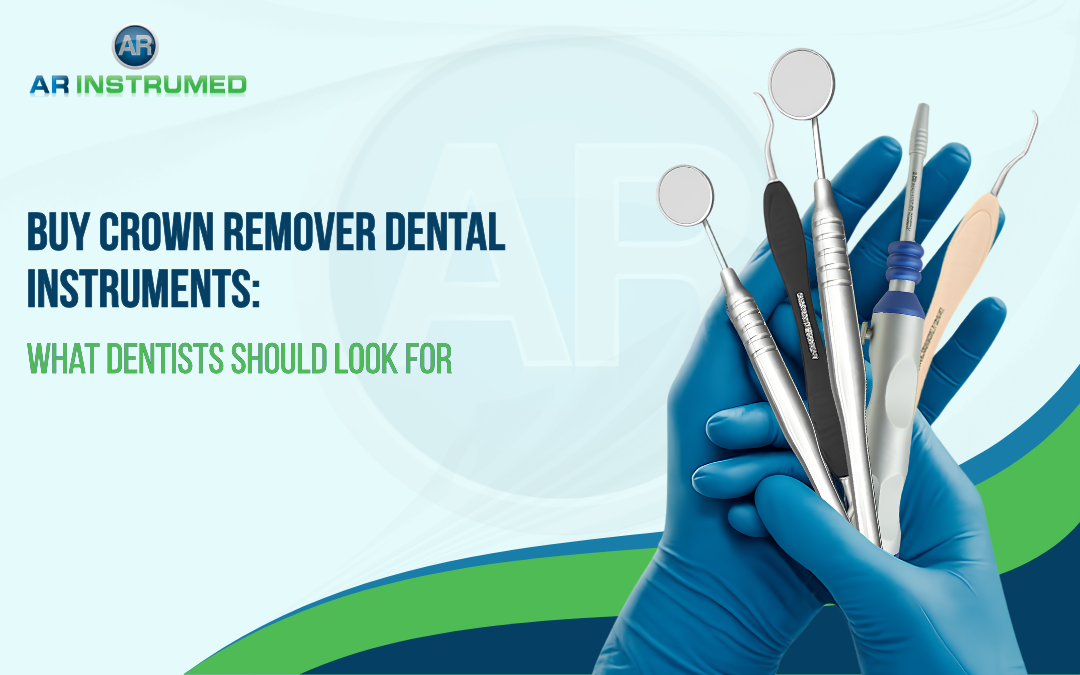
Removing a dental crown safely and efficiently depends heavily on using the right instrument for the situation. Not every crown removal case is the same cement type, crown material, margin design and patient anatomy all influence which tool works best. Because of this, dentists and clinics need to think beyond price alone and consider instrument type, tip/jaw design, handling, material quality, ergonomics and durability before making a purchase.
AR INSTRUMED manufactures and supplies dental instruments, including a range of crown removal tools designed for professional clinical use. This guide walks through the practical factors that matter when choosing crown remover dental instruments, whether you’re a solo practitioner, a clinic manager, or a dealer sourcing instruments for distribution.
What Are Crown Remover Dental Instruments?
Crown remover dental instruments are tools used in prosthodontic and restorative procedures to detach a crown, bridge, or other fixed restoration from a prepared tooth. This category covers several distinct instrument designs, each suited to different clinical approaches:
- Crown removers – general-purpose instruments for dislodging cemented restorations
- Crown remover forceps – plier-style instruments that grip and apply controlled force
- Crown grippers – designed to hold and stabilize a crown during removal
- Crown openers – used to create leverage or access at the crown margin
- Automatic crown removers – mechanized instruments that deliver impact force through interchangeable tips
- Crown remover kits – sets combining multiple tips or instruments for varied clinical scenarios
Understanding these categories is the first step to choosing an instrument that matches your actual clinical workflow rather than buying based on name recognition alone.
Explore the Crown Remover CategoryWhat Should Dentists Look for When Buying Crown Remover Instruments?
Choosing the right instrument means evaluating several practical factors together, not in isolation.
Instrument type and intended application
Consider whether your caseload calls for a manual crown remover, forceps, or an automatic device. High-volume prosthodontic work may benefit from different tools than general restorative practice.
Crown or restoration type
The material and cementation of the restoration you’re removing can influence which tip or jaw design is more practical.
Jaw or tip design
Different jaw shapes and tip profiles affect how an instrument engages the crown margin. Reviewing tip options including diamond-tipped variants helps match the instrument to your technique.
Grip and handling
Ergonomic handle design affects control during procedures, particularly for practitioners performing multiple removals in a session.
Instrument size and working length
Access and visibility vary by case; instrument length should suit posterior and anterior work as needed.
Material and construction
Instrument-grade materials affect longevity and performance under repeated sterilization cycles.
Sterilization requirements
Confirm the instrument is built to withstand your clinic’s sterilization protocol without compromising function.
Durability and maintenance
Instruments used frequently should hold up to repeated clinical use without losing precision.
Individual instrument vs. kit
A single instrument may suit focused needs, while a kit offers flexibility across varied cases.
Supplier and manufacturer reliability
Consistency between orders matters, especially for clinics reordering the same instrument over time.
Availability for clinics and professional buyers
Check that the supplier can support both single-unit purchases and larger professional orders.
Bulk purchasing for B2B buyers
Dealers and distributors should confirm product range and communication channels before committing to a supplier relationship.
Crown Remover vs. Crown Remover Forceps: What's the Difference?
Both instruments are used to remove crowns, but their mechanics differ. A standard crown remover typically works by applying directional force or impact to dislodge the restoration, while crown remover forceps use a gripping, plier-based action to hold and pull the crown free.
Neither design is universally superior the right choice depends on the clinical situation, the practitioner’s preferred technique, and the type of restoration being removed. Many clinics keep both types available to accommodate different cases.
Manual, Automatic & Kit Options
Manual crown removers, including forceps, grippers and openers, give the practitioner direct tactile control over the removal process and are commonly used across general and prosthodontic practice.
Automatic crown removers, such as devices supplied with interchangeable tips and a mounting kit, use mechanized force to assist removal and may suit practitioners who prefer a consistent, tool-driven approach.
Crown remover kits, which bundle multiple tips or instruments, offer flexibility for clinics handling a variety of crown types and cases without purchasing each tool separately.
The right option depends on caseload, technique preference and how much variability a clinic sees in restoration types not on one format being objectively “best.”
Why Buying From the Right Dental Instrument Manufacturer Matters
Instrument quality and consistency depend heavily on the manufacturer behind the product. When evaluating a supplier, professional buyers should consider:
- Product range — a supplier offering multiple crown remover designs and tip variations
- Manufacturing capabilities — AR INSTRUMED uses CNC technology in its production process, supporting consistency across instrument batches
- Product consistency — instruments that perform the same way order after order
- Professional support — responsive communication for clinical and B2B buyers
- Customization — AR INSTRUMED works with customers on unique instrument designs or modifications where feasible
- Dealer and distributor requirements — clear channels for bulk inquiries and ongoing supply
These factors matter more over time than a single low-price purchase, particularly for clinics and distributors that need dependable reordering.
Choosing Crown Remover Instruments for Dental Clinics, Dealers & Distributors
For dentists and clinics: focus on matching instruments to your actual procedures the crown types you most often remove, your preferred technique, and whether an individual tool or a kit better supports your day-to-day workflow.
For dealers and distributors: evaluate the supplier’s product range, communication responsiveness, and capacity to support bulk and repeat orders. Building a long-term supplier relationship reduces sourcing friction as your customer base grows.
Need crown remover instruments for your clinic or distribution business?
Crown Remover Buying Checklist
- Choose the appropriate crown removal instrument for your caseload
- Check jaw/tip design and compatibility with your technique
- Consider handling, grip and working length
- Confirm material and sterilization suitability
- Decide between individual instruments and a kit
- Consider supplier/manufacturer support and consistency
- Contact the supplier for professional or bulk purchasing requirements
Explore Crown Remover Dental Instruments From AR INSTRUMED
AR INSTRUMED supplies a range of prosthodontic and crown removal instruments, including crown removers, crown remover forceps, crown grippers, crown openers, automatic crown removers, and crown remover kits.
Find the right crown removal tool for your practice by browsing the Crown Remover category or comparing designs in Crown Remover Forceps . For the full instrument range, visit the online shop .
For clinics, dealers, and distributors with professional purchasing needs, get in touch with AR INSTRUMED or submit a dealer inquiry to discuss product range and bulk requirements.
Frequently Asked Questions
1. What should dentists look for when buying crown remover dental instruments?
Dentists should evaluate instrument type, tip/jaw design, grip and handling, working length, material quality, sterilization compatibility, and whether an individual instrument or a kit best fits their clinical needs.
2. What is the difference between a crown remover and crown remover forceps?
A crown remover typically applies directional force or impact to dislodge a crown, while crown remover forceps use a gripping, plier-based action to hold and pull the restoration free. The better choice depends on the case and technique.
3. How do I choose the right crown remover for my dental practice?
Consider your typical caseload, the crown types you remove most often, your preferred technique (manual or automatic), and whether a single instrument or a multi-tip kit suits your workflow.
4. Are crown remover kits useful for dental clinics?
Kits can be useful for clinics handling varied crown types and cases, since they provide multiple tips or instruments in one set rather than requiring separate purchases.
5. Can dental clinics, dealers and distributors buy crown remover instruments in bulk?
Yes. Professional and bulk purchasing requirements can be discussed directly with AR INSTRUMED through a contact inquiry or a dealer inquiry submission.