


Stainless Steel vs Titanium Dental Instruments: Which Material Is Best? (2026 Guide)

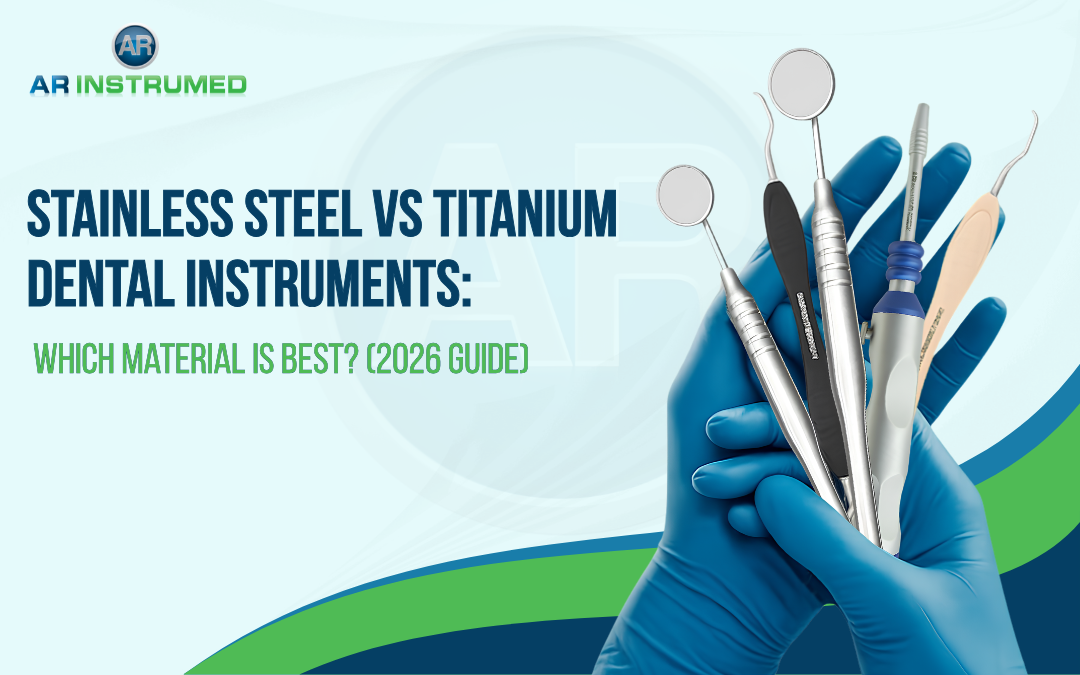
If you have ever held two dental instruments that looked identical but felt completely different in your hand, you already understand why material choice matters. The debate between stainless steel vs titanium dental instruments is one of the most searched questions among dentists, clinic owners, and bulk buyers comparing options from a dental instrument manufacturer or dental instrument supplier.
This 2026 guide compares strength, weight, corrosion resistance, biocompatibility, and cost so you can decide which dental instruments material actually fits your daily practice whether that is general surgery, implantology, or restorative dentistry.
Stainless steel dental instruments have been the backbone of dentistry for decades. Made from medical grade stainless steel, they cover almost every category of dental hand instruments extraction forceps, elevators, dental scalers, periodontal instruments, curettes, and surgical forceps. Their popularity comes from a proven balance of strength, sharpness, and affordability.
Advantages of Stainless Steel Dental Instruments
- Hardness and edge retention: hardened stainless steel holds a fine cutting edge, which is essential for scalers, curettes, scissors, and other cutting instruments.
- Strength for surgical use: it withstands the pressure of extractions, bone work, and heavy clinical use without bending.
- Corrosion resistant dental instruments: a passive oxide layer protects against rust when instruments are cleaned and autoclaved correctly.
- Cost-effective: stainless steel remains the most budget-friendly option, which is why most wholesale dental instruments orders are still steel-based.
Limitations of Stainless Steel Dental Instruments
- Heavier than titanium, which can add up to hand fatigue during long procedures.
- Cutting grades are magnetic, which may not suit every clinical setting.
What Are Titanium Dental Instruments?
Titanium dental instruments are the modern alternative, increasingly requested by clinics that perform implant and microsurgical procedures. Titanium alloy is prized in medicine for a combination of light weight and biological compatibility that stainless steel cannot fully match.
Advantages of Titanium Dental Instruments
- Lightweight design: titanium instruments are noticeably lighter, reducing hand and wrist fatigue during long surgical sessions.
- Excellent biocompatibility: titanium is well tolerated by human tissue, making it a natural fit for implant dentistry.
- Implant-friendly: titanium or titanium-coated tools avoid galvanic interaction with titanium implants and abutments, reducing the risk of scratching the implant surface.
- Non-magnetic and highly corrosion resistant: useful in specific clinical and imaging environments.
Limitations of Titanium Dental Instruments
- Softer edge than hardened stainless steel, so it is less suited to heavy cutting instruments.
- Generally priced higher than standard stainless steel dental instruments.
Titanium-Coated Dental Instruments: The Best of Both Worlds
A third category titanium-coated dental instruments combines a hardened stainless steel core with a thin titanium nitride coating, recognisable by its gold tone. The coating creates a non-stick surface that stops composite resin from clinging to the instrument tip, which makes titanium-coated composite instruments a favourite for restorative placement work. In short, you get the strength of stainless steel with a working surface closer to titanium.
Stainless Steel vs Titanium Dental Instruments: Key Differences
| Feature | Stainless Steel | Titanium |
|---|---|---|
| Weight | Heavier | Lightweight |
| Hardness / Edge Retention | Excellent (best for cutting) | Moderate (softer edge) |
| Corrosion Resistance | Very good with proper care | Excellent |
| Biocompatibility | Good | Superior |
| Magnetic Properties | Magnetic (cutting grades) | Non-magnetic |
| Cost | More affordable | Higher price |
| Best Use Case | Scaling, cutting, extraction | Implant & abutment handling |
Which Material Should You Choose?
- Extraction, scaling, and cutting work: hardened stainless steel dental surgical instruments remain the best choice for edge retention and strength think tooth forceps, elevators, and orthodontic pliers.
- Implant and abutment handling: reach for titanium instruments to protect implant surfaces and reduce hand fatigue during longer implantology cases, including sinus lift instruments and osteotomes.
- Composite and restorative placement: titanium-coated, non-stick instruments give the cleanest results with the least resin build-up.
As a general rule, most clinics keep a mixed set reusable, autoclavable stainless steel instruments for daily surgical work, and premium titanium instruments reserved for implant cases.
Why Choose AR Instrumed for Your Dental Instruments?
AR Instrumed is a dental instrument manufacturer and dental instrument exporter based in Sialkot, Pakistan a city recognised worldwide for surgical instrument manufacturing. We produce both CE certified dental instruments and ISO certified dental instruments, covering stainless steel, titanium, and titanium-coated ranges.
- OEM dental instruments: private-label manufacturing built around your clinic or brand specifications.
- Wholesale dental instruments: factory-direct pricing for distributors, clinics, and dental instrument suppliers across Pakistan and abroad.
- Reliable quality: every batch of autoclavable, corrosion resistant, reusable dental instruments goes through strict quality checks before dispatch.
- Full product range: from extraction forceps and periosteal elevators to titanium implantology instruments and diagnostic mirrors.
Whether you need premium titanium instruments for implant surgery or high-quality stainless steel dental instruments for everyday practice, AR Instrumed brings Sialkot’s decades of manufacturing experience to every order. Explore the full catalog at ar-instrumed.com.
Final Verdict
There is no single winner in the stainless steel vs titanium dental instruments debate the right material depends on the procedure. Stainless steel still leads on strength, edge retention, and price, while titanium wins on weight, biocompatibility, and implant safety. Understanding these differences helps dentists and buyers choose the best dental instruments for each clinical need, and helps suppliers stock the right mix for their customers.
Looking for a trusted dental instrument manufacturer in Pakistan? Visit AR Instrumed at ar-instrumed.com to browse professional, CE certified surgical, implantology, and restorative instruments.
Frequently Asked Questions
1. Are titanium dental instruments better than stainless steel?
Not universally titanium is lighter and more biocompatible, which is ideal for implant work, while stainless steel offers a harder edge and better value for cutting and scaling instruments.
2. Do titanium dental instruments rust?
No. Titanium forms a stable oxide layer that resists corrosion even better than stainless steel, making it a reliable choice for long-term clinical use.
3. Which dental instruments last longer, titanium or stainless steel?
Both can last for years with proper sterilization and care. Stainless steel edges may dull faster under heavy cutting use, while titanium resists corrosion for longer but is more prone to surface scratching.
4. Why are stainless steel dental instruments still more popular?
Stainless steel dental instruments cost less, hold a sharper cutting edge, and cover almost every category of dental hand instruments, which is why most clinics and dental instrument suppliers still order them in bulk.
5. Where can I buy high-quality dental instruments in Pakistan?
AR Instrumed, based in Sialkot, is a CE certified dental instrument manufacturer and exporter offering OEM and wholesale dental instruments. Visit ar-instrumed.com to view the full catalog.