


Best Composite Placement Instruments for Dentists: Buyer’s Guide (2026)

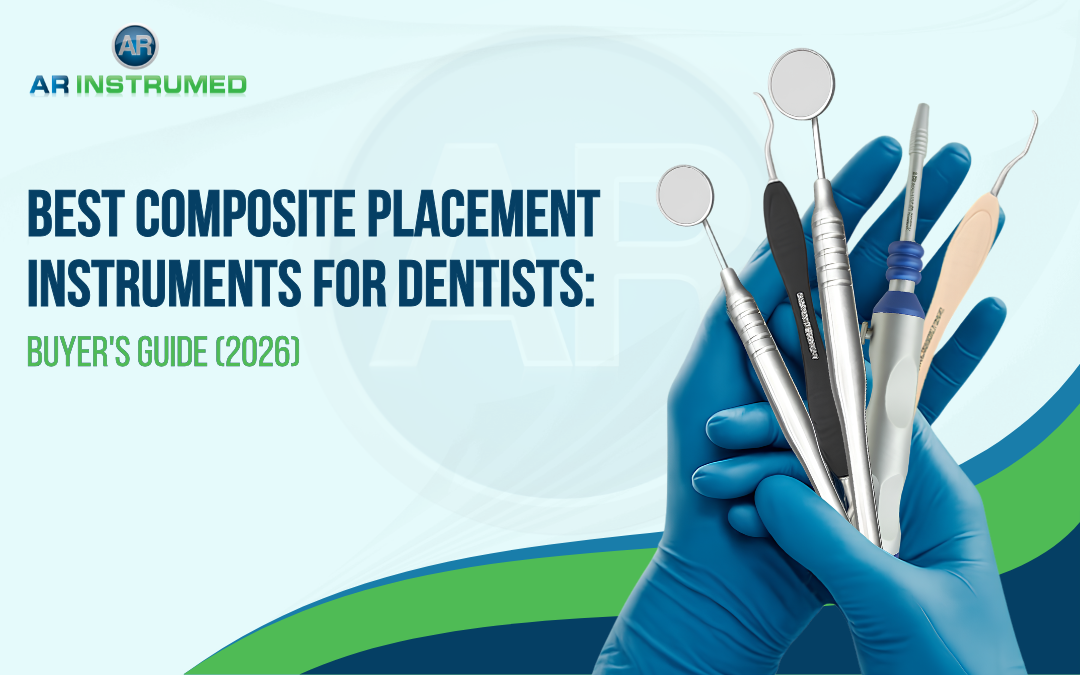
Choosing the right composite placement instruments directly affects restoration quality, chairside efficiency, and patient outcomes. Whether you're an individual dentist, a clinic manager, or a distributor sourcing dental composite instruments in bulk, this guide breaks down everything you need to know before you buy. Explore professional instruments from AR Instrumed.
What Are Composite Placement Instruments?
Composite placement instruments are precision hand tools used to place, shape, and sculpt composite resin during direct restorations. They help dentists achieve accurate anatomical contours, smooth margins, and strong marginal seals in both anterior and posterior restorations.
Unlike general restorative dental instruments, composite-specific tools are designed with non-stick tips, often silicone or PTFE-coated that prevent resin from dragging or sticking during placement, giving clinicians better control over the final result.
Composite filling instruments aren’t just tools, they’re an extension of clinical precision. Premium instruments:
- Reduce chair time by minimizing resin drag and rework
- Improve anatomical accuracy in anterior composite restorations
- Extend instrument lifespan through corrosion-resistant materials
- Support consistent, repeatable results across a dental team
Low-quality instruments, by contrast, often flex, stain, or lose their tip shape after repeated sterilization, a costly problem for busy clinics and hospitals processing high patient volumes.
Types of Composite Placement Instruments
Understanding the different categories helps you build a complete, procedure-ready kit.
Composite Sculpting Instruments
Used for shaping the resin into anatomically correct contours before curing, especially important for posterior composite instruments handling occlusal anatomy.
Composite Modeling Instruments
Designed for fine detail work cusps, grooves, and interproximal contacts where precision matters most.
Composite Contouring Instruments
Ideal for refining margins and surface texture after initial placement, ensuring a seamless, polished finish.
Anterior vs Posterior-Specific Designs
Anterior composite instruments typically feature finer, more delicate tips for aesthetic work, while posterior composite instruments are built for durability and bulk-fill applications.
Features to Look for Before Buying
When evaluating composite placement instruments for dentists, prioritize:
- Tip material silicone or PTFE-coated for non-stick performance
- Handle ergonomics balanced weight to reduce hand fatigue during long procedures
- Corrosion resistance surgical-grade stainless steel that withstands repeated autoclaving
- Double-ended designs for versatility without switching instruments mid-procedure
- CE certification confirming the instrument meets recognized manufacturing and safety standards
- Sterilization compatibility tools that maintain tip integrity after hundreds of sterilization cycles
Silicone vs Traditional Composite Instruments
One of the most common buying decisions dentists face is choosing between silicone composite instruments and traditional stainless steel tools.
| Feature | Silicone Composite Instruments | Traditional Stainless Steel |
|---|---|---|
| Resin Sticking | Minimal to none | Moderate to high |
| Best For | Smooth contouring, anterior work | Bulk placement, condensation |
| Maintenance | Easy cleaning, low resin buildup | Requires more frequent cleaning |
| Precision | High for fine detail | High for structural placement |
| Durability | Long-lasting with proper care | Very durable, autoclave-stable |
| Ideal User | Cosmetic and anterior-focused dentists | General and posterior restorative work |
Most experienced dentists keep both types of hand silicone instruments for smooth aesthetic finishing, and stainless steel for firm placement and condensation.
Common Mistakes When Choosing Composite Instruments
Avoid these frequent pitfalls when sourcing dental hand instruments:
- Buying based on price alone cheap instruments often lose shape or corrode quickly
- Ignoring tip variety a limited tip range restricts procedure flexibility
- Overlooking sterilization ratings non-compliant instruments create infection control risks
- Skipping supplier verification always confirm CE certification and manufacturing standards
- Not considering bulk pricing clinics and distributors often miss cost savings available through wholesale composite instruments programs
Why Dentists Prefer Premium Composite Instruments
Premium vs standard instruments isn’t just a marketing distinction; the performance difference is measurable in daily practice.
| Criteria | Premium Instruments | Standard Instruments |
|---|---|---|
| Material Quality | Surgical-grade, corrosion-resistant steel | Mixed-grade or coated metal |
| Tip Retention | Maintains shape after 500+ cycles | Degrades faster |
| Precision | Consistent across every use | Variable, prone to flex |
| Longevity | Multi-year clinical lifespan | Shorter replacement cycle |
| Cost Over Time | Lower total cost of ownership | Frequent replacement costs |
For clinics performing high volumes of restorative dentistry procedures, investing in premium restorative dental instruments consistently reduces long-term costs while improving clinical outcomes.
Why Choose AR Instrumed
AR Instrumed is a trusted global manufacturer of premium dental instruments, supplying dentists, clinics, hospitals, distributors, importers, and wholesalers worldwide. AR Instrumed’s composite placement instruments are built to meet demanding clinical and commercial standards, offering:
- Premium, precision-crafted composite instruments
- CE-quality manufacturing processes
- OEM and private label dental instruments services
- Worldwide exports with fast global shipping
- Bulk and wholesale dental instruments ordering options
- Dedicated distributor partnership opportunities
- Responsive, knowledgeable customer support
Whether you need a small clinical order or a large bulk shipment as a dental instruments exporter partner, AR Instrumed's manufacturing capabilities support both individual practices and B2B distribution networks.
Browse Our Composite Instruments Collection →Conclusion
Selecting the best composite placement instruments comes down to balancing precision, durability, and value whether you’re equipping a single operatory or sourcing custom dental instruments for a distribution network. Premium, CE certified instruments from a proven manufacturer reduce long-term costs and elevate the quality of every restoration.
Ready to upgrade your instrument kit or explore wholesale options?
Frequently Asked Questions
What are the best composite placement instruments for dentists?
The best composite placement instruments combine non-stick silicone or coated tips, ergonomic handles, and CE certified, corrosion-resistant materials. Premium double-ended designs offer the versatility needed for both anterior and posterior composite restorations.
What is the difference between silicone and stainless steel composite instruments?
Silicone composite instruments resist resin sticking and are ideal for fine contouring, while stainless steel instruments offer greater strength for bulk placement and condensation. Most dentists use both together for complete procedure coverage.
How do I choose composite placement instruments for my practice?
Consider tip material, sterilization compatibility, ergonomics, and certification status. Clinics buying in volume should also compare wholesale composite instruments pricing and supplier reliability before committing to a manufacturer.
Are premium composite instruments worth the extra cost?
Yes. Premium composite instruments maintain tip shape longer, resist corrosion, and reduce replacement frequency, lowering total cost of ownership compared to standard instruments over time.
Does AR Instrumed offer OEM and private label composite instruments?
Yes, AR Instrumed provides OEM and private label dental instruments manufacturing, along with bulk ordering, worldwide exports, and dedicated support for distributors and importers.