


Silicone Dental Instruments: Benefits, Types, Uses & How to Choose the Best Instruments (2026 Guide)

Introduction
Dentistry is a hands-on profession, and the tools a dentist holds all day matter more than most patients ever realize. Over the past decade, silicone dental instruments have moved from a niche comfort upgrade to a standard request among clinicians who spend long hours performing restorative and diagnostic work. The shift isn’t cosmetic it’s practical. A lighter grip, better control, and less hand fatigue can make a real difference across a full day of appointments.
This guide walks through what silicone dental instruments actually are, their benefits, the main types available, how they compare to traditional stainless steel handles, and what to look for when choosing a supplier. Whether you’re a practicing dentist, a clinic manager, or a distributor sourcing for your region, this article is built to give you a clear, evidence-based picture before you buy.
What Are Silicone Dental Instruments?
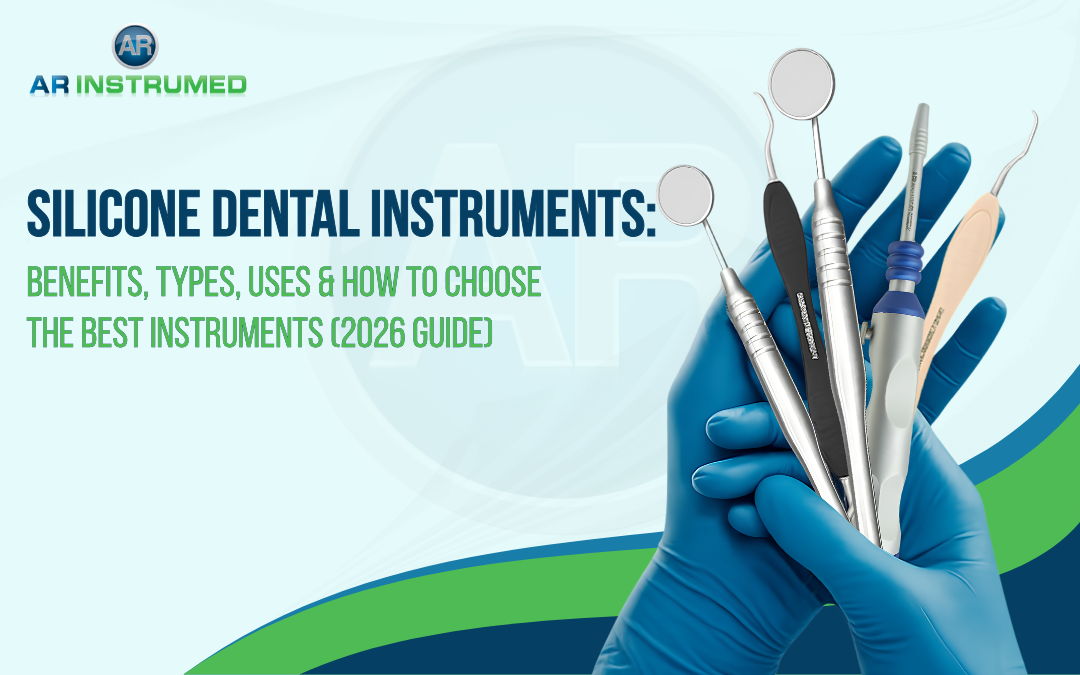
Silicone dental instruments are precision hand instruments such as scalers, probes, excavators, and composite instruments built with a stainless steel working end and a soft, textured silicone grip fitted over the handle. The steel tip retains the strength, edge quality, and corrosion resistance dentists expect, while the silicone layer changes how the instrument feels in the hand.
The silicone sleeve is typically autoclavable, color-coded for quick identification, and molded with a textured or ribbed surface to reduce slipping during fine motor tasks. In short, the instrument’s clinical function stays the same what changes is comfort, grip stability, and, for many practices, workflow organization through color coding.
Benefits of Silicone Dental Instruments
1. Reduced Hand and Wrist Fatigue
A softer, contoured grip distributes pressure more evenly across the fingers, which can lessen strain during long procedures or back-to-back appointments a factor that matters for clinicians managing repetitive strain over years of practice.
2. Improved Grip and Control
The textured silicone surface offers more traction than smooth metal, particularly when hands are gloved or when moisture is present in the operating field. Better traction generally supports steadier, more controlled movements during fine procedures.
3. Lightweight Feel Without Losing Balance
Many silicone-handled instruments are engineered to maintain the same balance point as their stainless steel counterparts, so clinicians get added comfort without a change in how the instrument handles.
4. Color-Coded Organization
Silicone grips are easy to produce in multiple colors, which clinics use to organize instruments by procedure type, department, or operator reducing setup time and mix-ups during busy schedules.
5. Sterilization Compatibility
Quality silicone-handled instruments are designed to withstand standard autoclave cycles, so they fit into existing sterilization protocols without requiring separate handling procedures.
6. Reduced Vibration Transfer
Silicone naturally dampens vibration better than bare metal, which can make instruments feel steadier during procedures that involve fine, repetitive motion.
Types of Silicone Dental Instruments
Silicone-handled versions are now available across most major instrument categories:
Common Types of Silicone Dental Instruments
| Instrument Type | Common Use |
|---|---|
| Silicone Scalers | Removing plaque and calculus deposits |
| Silicone Probes / Explorers | Diagnostic examination of tooth surfaces |
| Silicone Composite Instruments | Placing and shaping restorative composite material |
| Silicone Excavators | Removing decayed tooth structure |
| Silicone Periodontal Instruments | Periodontal assessment and maintenance |
| Silicone Orthodontic Pliers & Instruments | Wire bending, bracket placement, and adjustments |
| Silicone Surgical Instruments | Extraction and minor oral surgery support |
| Silicone Implant Instruments | Implant site preparation and placement support |
Clinics can typically order these individually or as part of a complete instrument set, which is often more cost-effective for practices standardizing their operatory kits.
Common Uses in Modern Dentistry
Silicone-handled instruments are used across nearly every discipline in general and specialist dentistry:
- Restorative dentistry — composite filling instruments benefit from the added grip needed during precise material placement and shaping.
- Periodontics — scalers and curettes with silicone handles reduce hand strain during extended scaling and root planing sessions.
- Orthodontics — pliers and adjustment tools with ergonomic grips support the repetitive hand movements common in bracket and wire work.
- Oral surgery and implantology — surgical and implant instruments benefit from stable, non-slip control during procedures requiring precision.
- General diagnostics — probes and mirrors with silicone grips are used in routine examinations where comfort over many patients per day adds up.
Silicone Handle vs Traditional Stainless Steel Handle
| Feature | Silicone Handle | Traditional Stainless Steel Handle |
|---|---|---|
| Grip Comfort | Soft, cushioned, textured | Firm, smooth metal surface |
| Hand Fatigue | Generally lower over long use | Can increase with extended use |
| Weight | Often lighter overall feel | Heavier, denser feel |
| Slip Resistance | Higher, even with gloves/moisture | Lower, especially when wet |
| Color Coding | Easy and common | Limited without added markings |
| Sterilization | Autoclavable (quality-dependent) | Fully autoclavable |
| Initial Cost | Slightly higher | Generally lower |
| Longevity | High with proper care | Very high, industry standard |
Neither option is universally “better” the right choice depends on clinical preference, procedure type, and budget. Many practices now use a mix of both, reserving silicone-handled instruments for procedures involving longer chair time or repetitive hand motion.
How to Choose the Best Silicone Dental Instruments
When evaluating suppliers or specific products, consider the following:
- Steel Quality — Look for German or Japanese-grade stainless steel (such as 410 or 420 series) for the working end, which affects sharpness retention and corrosion resistance.
- Silicone Grade — Medical-grade, autoclave-rated silicone is essential; lower-grade silicone can degrade or discolor after repeated sterilization cycles.
- Grip Design — Ergonomic contouring and texture should match the instrument’s intended use — finer instruments benefit from slimmer grips, while scalers often use wider, ribbed handles.
- Manufacturer Reputation and Certifications — Check for ISO 13485 certification and CE marking, which indicate the manufacturer follows recognized quality management standards for medical devices.
- Customization Options — For clinics, distributors, or OEM buyers, the ability to select handle colors, engraving, and packaging can matter for branding and workflow.
- Sample Testing — Before placing bulk orders, requesting samples to test balance, grip, and finish is a practical step most experienced buyers take.
Why Quality Matters
Dental instruments are precision tools used in close proximity to patients, which makes consistency non-negotiable. Poor-quality steel can dull quickly or corrode after repeated sterilization, while low-grade silicone can crack, peel, or harbor residue if not properly bonded to the handle. Investing in well-manufactured instruments reduces replacement frequency, supports infection control protocols, and protects the clinical outcomes that depend on precise, reliable tools.
Why Choose AR Instrumed?
AR Instrumed, based in Sialkot, Pakistan, manufactures and exports a wide range of stainless steel and silicone-handle dental instruments for dentists, clinics, hospitals, distributors, and OEM/private-label partners worldwide. Instruments are produced using precision engineering and quality-controlled materials, with attention to durability, ergonomic comfort, and sterilization compatibility.
For buyers evaluating silicone instruments, alongside categories such as conservative instruments, orthodontic instruments, implantology instruments, surgical instruments, diagnostic instruments, and extraction instruments, AR Instrumed offers both individual instruments and complete instrument sets suited to clinics and bulk distributors alike.
Conclusion
Silicone dental instruments represent a practical evolution in dental hand tools combining the reliability of stainless steel with a more comfortable, controlled grip. For clinicians, the benefits show up in reduced fatigue and better handling over long procedures. For clinics and distributors, they offer organizational advantages through color coding and a product line that meets growing demand for ergonomic dental equipment.
Choosing the right supplier matters as much as choosing the right instrument type. Steel quality, silicone grade, certifications, and manufacturing consistency all determine whether an instrument performs reliably over its working life.
Frequently Asked Questions
1. What are silicone dental instruments used for?
They are used for the same clinical purposes as standard dental instruments scaling, probing, restorative work, orthodontics, and surgery with the added benefit of an ergonomic, non-slip silicone handle.
2. Are silicone dental instruments autoclavable?
Quality silicone-handled instruments made with medical-grade silicone are designed to withstand standard autoclave sterilization cycles. It’s important to confirm this with the manufacturer before purchase.
3. Do silicone handles affect instrument balance?
Well-engineered silicone-handled instruments are designed to preserve a similar balance point to their stainless steel counterparts, so clinical handling shouldn’t be significantly affected.
4. Are silicone dental instruments more expensive than steel-handled ones?
They can carry a slightly higher upfront cost due to the added manufacturing process, though many clinics find the comfort and reduced fatigue worthwhile over time.
5. How long do silicone handles last?
With proper sterilization practices and handling, medical-grade silicone handles typically maintain their integrity over an extended service life, though this can vary by usage frequency and care.
Upgrade Your Practice with Premium Silicone Dental Instruments
Looking to upgrade your practice or source high-quality silicone dental instruments in bulk? AR Instrumed offers precision-crafted silicone instruments trusted by dental professionals worldwide.
Whether you need OEM manufacturing, wholesale pricing, dealership opportunities, or custom product development, our experienced team is ready to help you find the right solution for your business.
Explore AR Instrumed